Sonja Eliason
Title
Sonja Eliason
Description
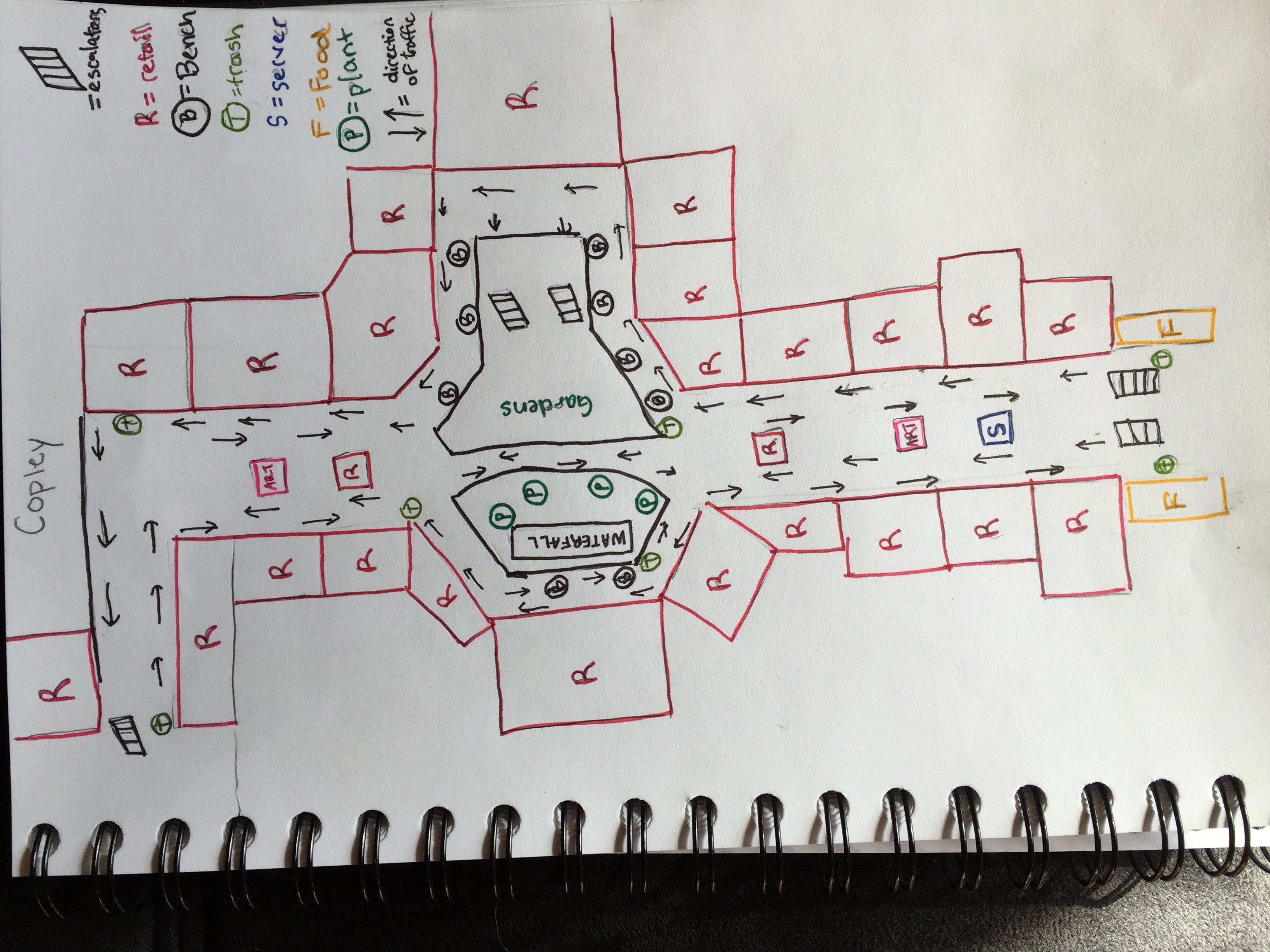
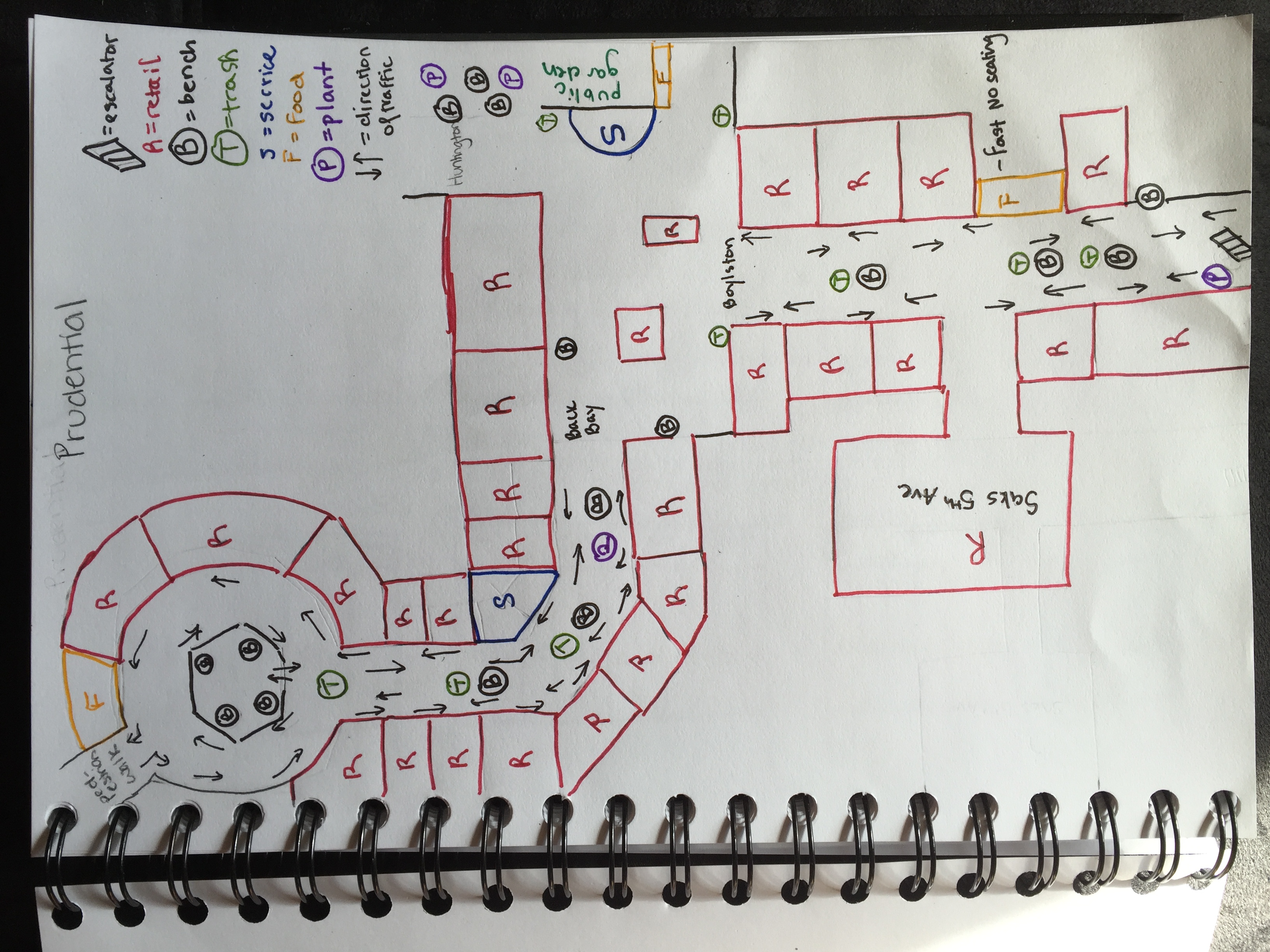
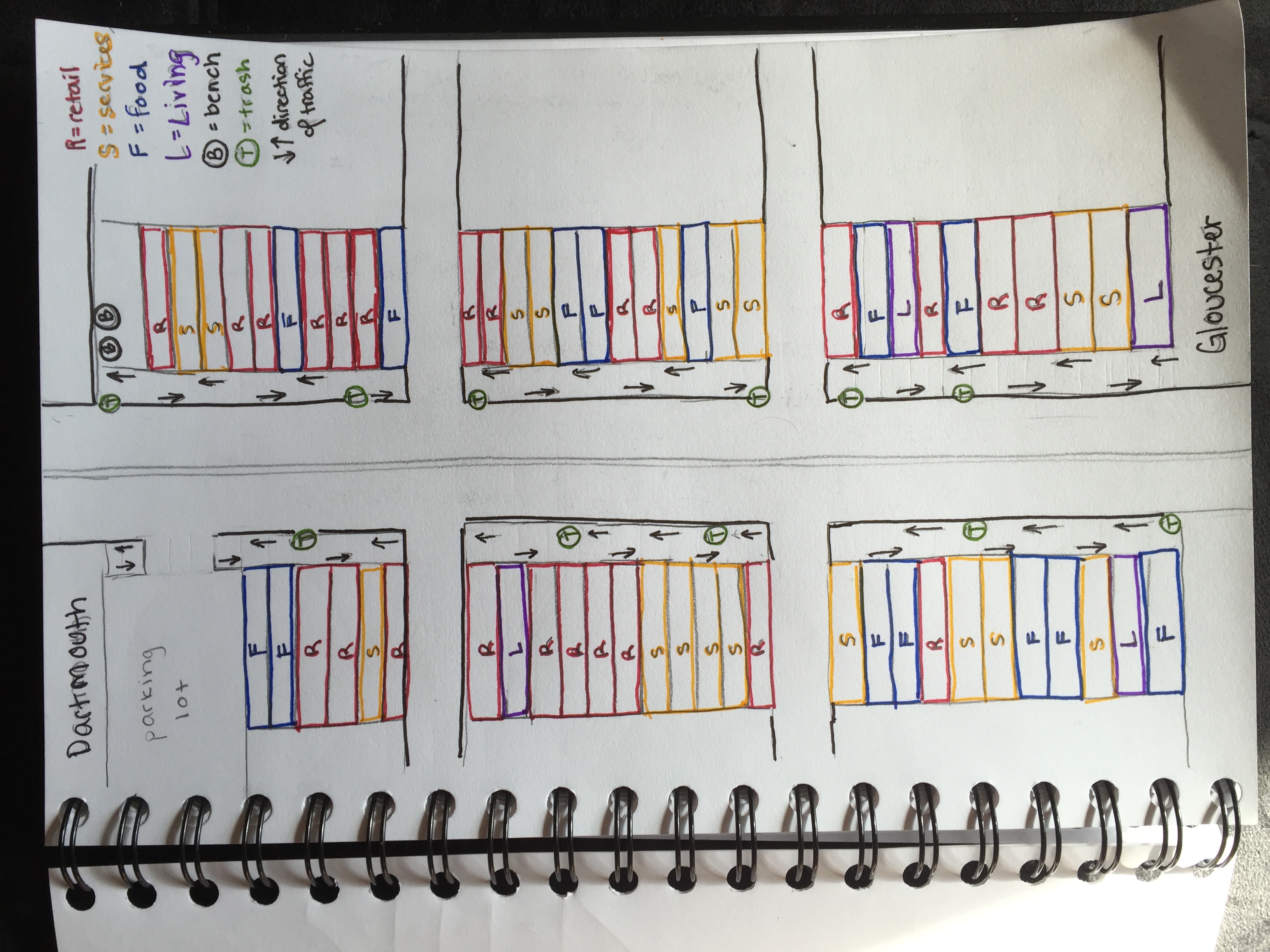
I chose to look at the comparative pattern of kinds of stores (retail vs. service vs. food) versus the presence of public spaces in each kind of shopping district. On Newbury Street, the stores were much more equally divided between food and retail, while the indoor malls were almost entirely retail. But the indoor malls had public spaces like gardens, as well as benches upon which people could rest. Newbury Street had neither of those. This seems to suggest that food establishments (the restaurants, cafes and coffee shops that are so prevalent on Newbury) play a similar role in the environment of the shopping district to public spaces: both are a place for people to rest and take a break. Indoor malls don’t feel the need to provide the same number of food stores since they provide public spaces for relaxation, so they can maximize their number of retail stores without denying people a place to rest and therefore risking them getting fatigued and leaving. Newbury, without these public spaces, has to provide a higher number of food establishments in which people can rest, otherwise they would decrease the length of time people would be willing to shop. Also to take into consideration would be that the indoor malls had an overall designer, so there was a voice for public spaces, compared to every storefront looking out for themselves as they do on Newbury, and there being no overall designer to advocate for public space. It’s interesting as well that the malls spend money on extensive interior gardens and plants, while Newbury seems to rely on the natural outdoors to provide that “garden” feeling. It’s almost like a smaller-scale version of the Park movement: shopping moved indoors, so people tried to figure out how to bring nature with it.
Files
Collection
Citation
“Sonja Eliason,” US-WORLD 29, accessed October 19, 2026, https://usworld29.omeka.fas.harvard.edu/items/show/106.