Tania Fabo
Title
Tania Fabo
Description
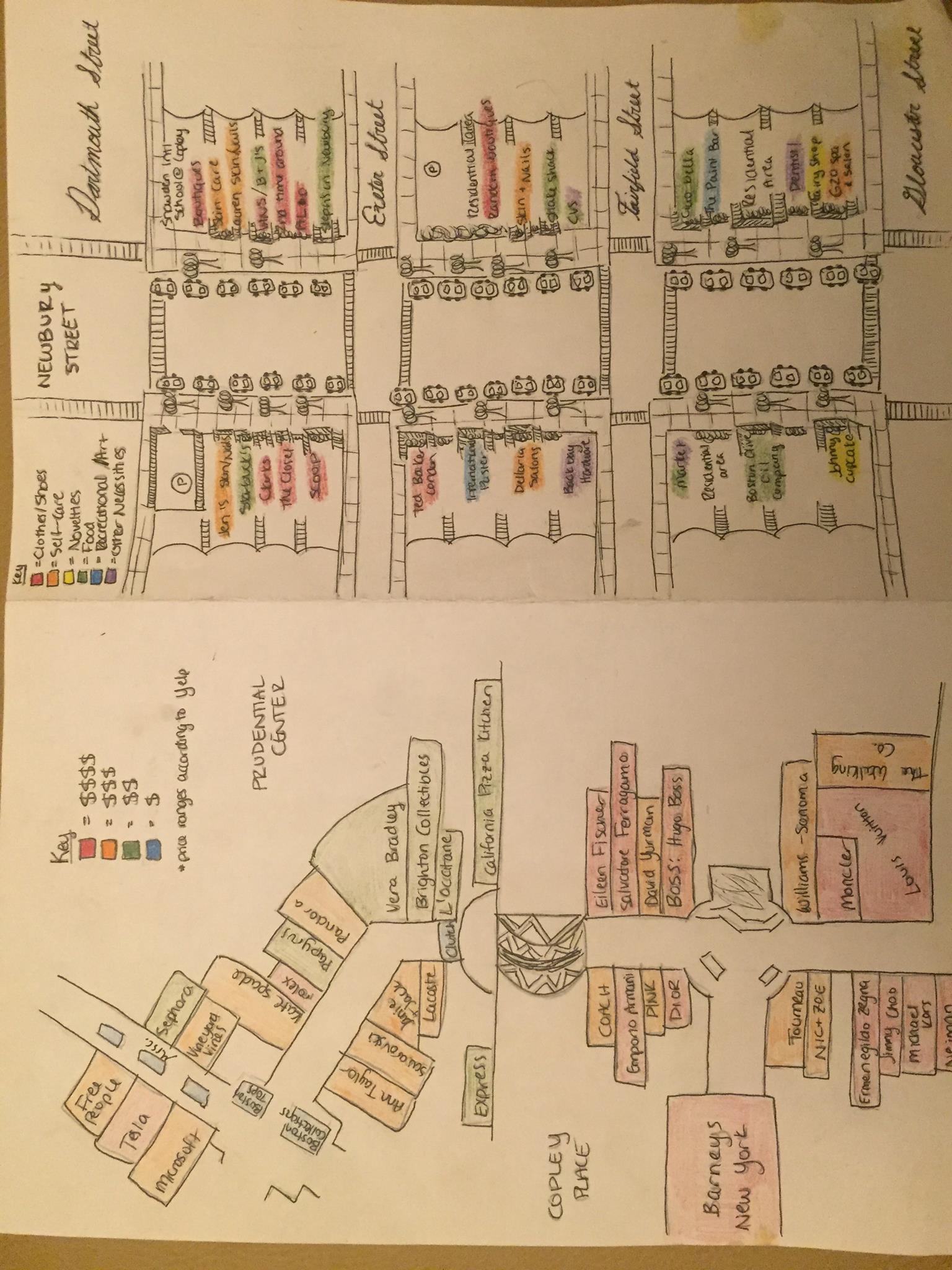
The first thing that I noticed when I entered Copley Place was how expensive everything looked. From the tiling, to the gilded ceiling, and the expensive brand-name stores that I had always associated with affluence (Louis Vuitton, Jimmy Choo, Armani, etc.), I felt immediately out of place. And I looked out of place, as the man standing outside of one of the stores who forgot to ask me—and only me—if I wanted a free sample, could probably tell. The Prudential Center, however, was a stark difference. I found myself surrounded by stores that I could see myself, a not-very-well-off college student, shopping at. The atmosphere was more familiar, and it reminded me a lot more of the shopping mall I visited at home. There was a greater diversity of people: not just the old white people I found myself surrounded by at Copley, but diversity in race and age. While there is no literal barrier between Copley Place and the Prudential Center, there seems to be an unspoken agreement about who has access to what spaces. Money acts as the barrier between the two very different worlds, and this is what I wanted to highlight in my sketch. On Newbury Street, I found some similarity to Prudential Center in terms of monetary accessibility and diversity of populations. However, Newbury Street is not a shopping mall, but rather a street in the heart of Boston, and the architecture reflects this, with the stores woven into housing complexes and residential areas. Given that it is a residential area, I noticed a greater variety of stores on the street in comparison to either of the malls: more restaurants, creative/community spaces, self-care places, etc. This difference of Newbury Street as a residential area and community, rather than simply a shopping area, is reflected in my sketch.
Files
Collection
Citation
“Tania Fabo,” US-WORLD 29, accessed October 19, 2026, https://usworld29.omeka.fas.harvard.edu/items/show/107.