Veronica Wickline
Title
Veronica Wickline
Description
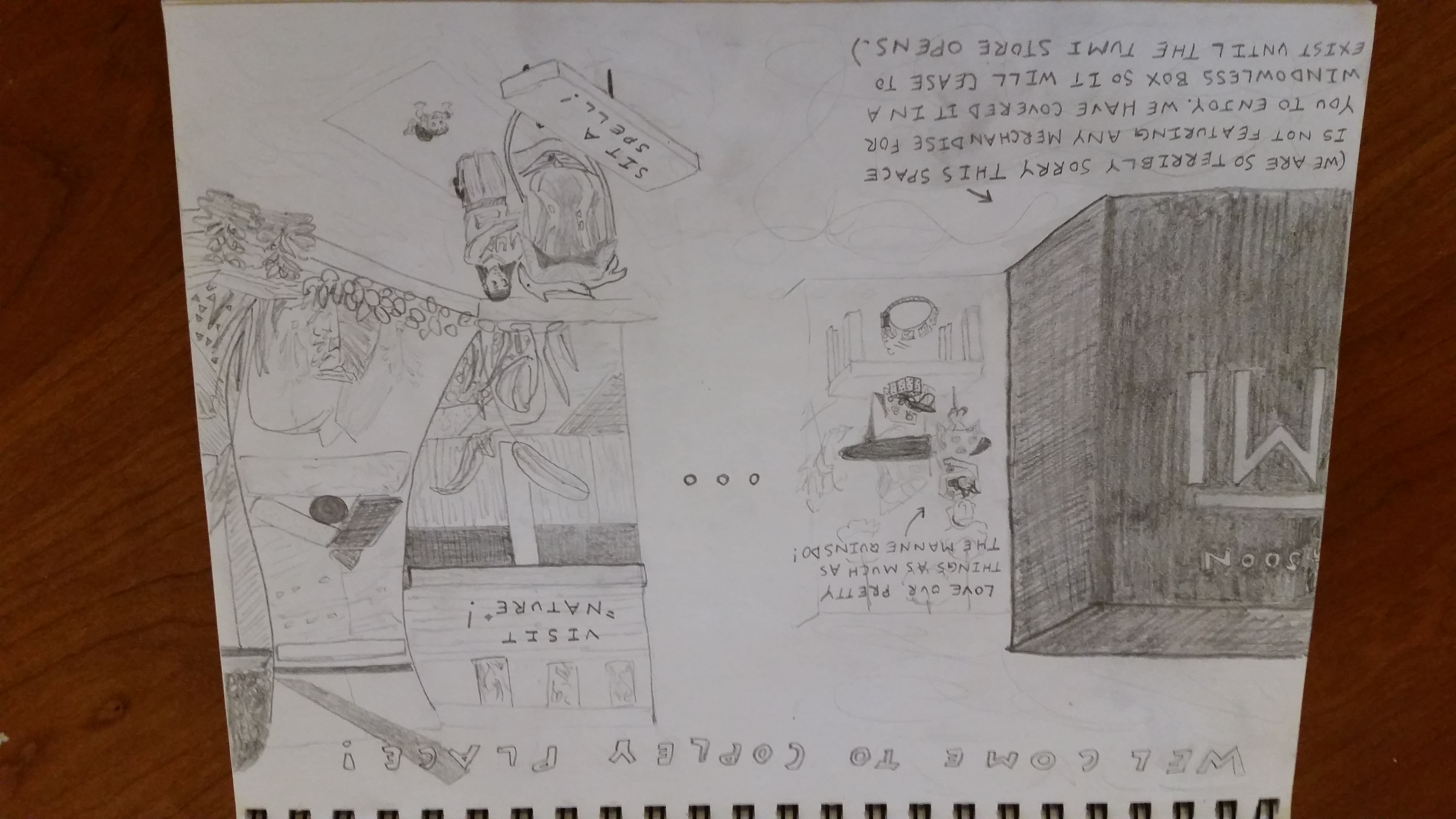
The primary difference I noticed between the indoor mall organization and the design of Newberry Street was the manner in which merchandise was featured from the windows. Throughout the malls, storefront displays appeared in windows that were much larger than human beings. Each store was a microcosmic world, featuring fabrics, accessories, and atmospheres unique to that brand. Looking through an indoor mall vendor's window, one rarely saw more than one object type (e.g. handbags OR dresses OR watches). When a store had shut down, rather than put up a “CLOSED” sign, the mall painted the windows black or built a box around the space so that it became invisible. More than anything, the indoor mall policed its visual output.
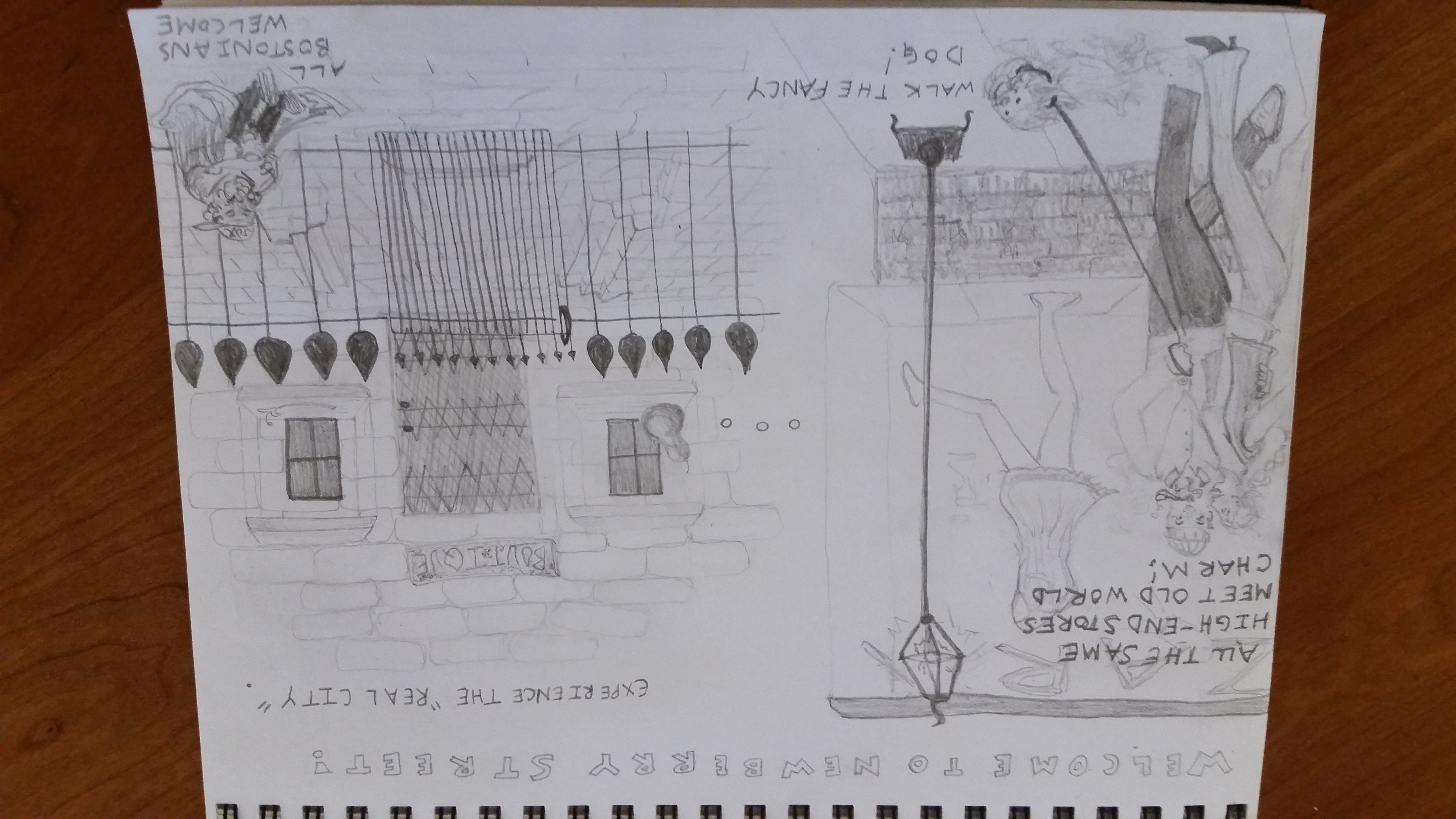
In contrast, Newberry Street emphasized an unplanned and casual atmosphere. Storefronts often consisted of small windows on the basement floor; however, one could also find large display cases for the high-end stores. Musicians in strange clothes played for money on the sidewalk. More people were walking their dogs. Because a street relies on city police rather than privately contracted security companies, there was less of a sense that someone could be out of place—though at neither location was anything like a formal dress code enforced.
Copley Place succeeds as a suburban shopping area in an urban space by duplicating the suburban mall but only selling spaces to high-end vendors. It’s a chique mall, a mall with all the amenities that urban concentrations of resources can afford. They are even putting in a special food court dedicated to Italian food only will be run by a famous chef. Newberry Street, conversely, emphasizes the city layout. Boston brick is everywhere, and interspersed between shops are the occasional homes and schools. Even with often similar stores, these two shopping areas manage to not put each other out of business by maintaining distinct vibes.
In contrast, Newberry Street emphasized an unplanned and casual atmosphere. Storefronts often consisted of small windows on the basement floor; however, one could also find large display cases for the high-end stores. Musicians in strange clothes played for money on the sidewalk. More people were walking their dogs. Because a street relies on city police rather than privately contracted security companies, there was less of a sense that someone could be out of place—though at neither location was anything like a formal dress code enforced.
Copley Place succeeds as a suburban shopping area in an urban space by duplicating the suburban mall but only selling spaces to high-end vendors. It’s a chique mall, a mall with all the amenities that urban concentrations of resources can afford. They are even putting in a special food court dedicated to Italian food only will be run by a famous chef. Newberry Street, conversely, emphasizes the city layout. Boston brick is everywhere, and interspersed between shops are the occasional homes and schools. Even with often similar stores, these two shopping areas manage to not put each other out of business by maintaining distinct vibes.
Files
Collection
Citation
“Veronica Wickline,” US-WORLD 29, accessed October 19, 2026, https://usworld29.omeka.fas.harvard.edu/items/show/161.