Edward Vasquez
Title
Edward Vasquez
Description
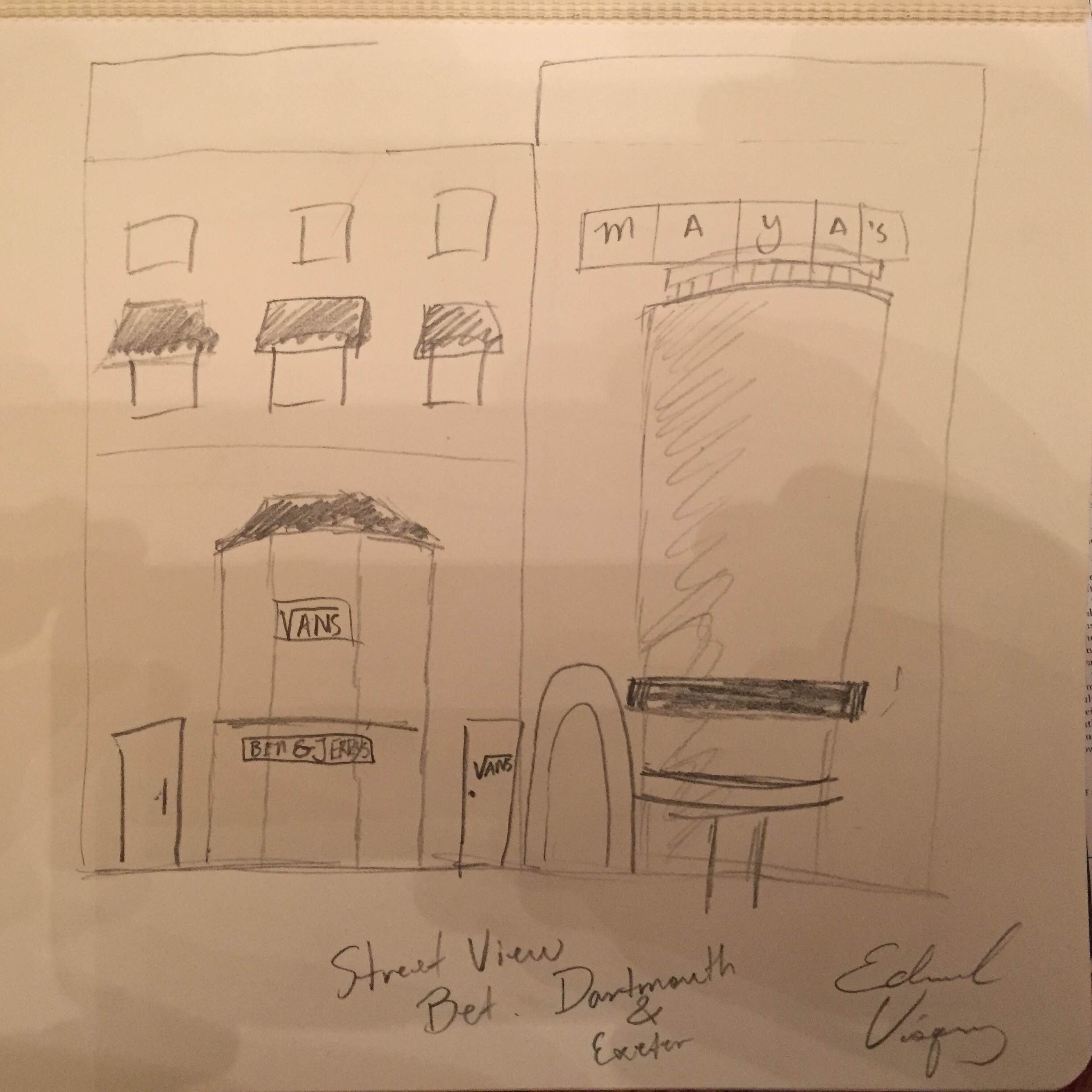
I am confident I know the purpose of Newbury St as of today: it is a shopping district, targeted toward affluent people. But it was not its only use historically—I walked by the old American Academy of Arts and Sciences building dedicated to Harvard’s own Louis Agassiz, now populated by a Gucci or a Victoria’s Secret. It is a street became commercial, an old street subsumed by shops that now reside within its shell of old Back Bay walk-ups, the new neighbors, say. And they are diverse, as well: you have the usual restaurant and food vendors to break up the shops (like a mall should), but also massage parlors, groomers—even pet shops and art galleries and a hardware store, all tailored to the Back Bay resident. What sets it apart from Faneuil Hall (another outdoor mall) and the Pru/Copley Plaza is that it does not pretend to be historical, despite incorporating historical buildings and businesses into its layout. Nor is it confusing in its design (more on that in a second). It is presented to one as a mall for malls’ sake, not as businesses brought in to break up the environment. It feels organic, in a word, like it developed naturally, though that may not necessarily be the case (depending on how you define “naturally”).
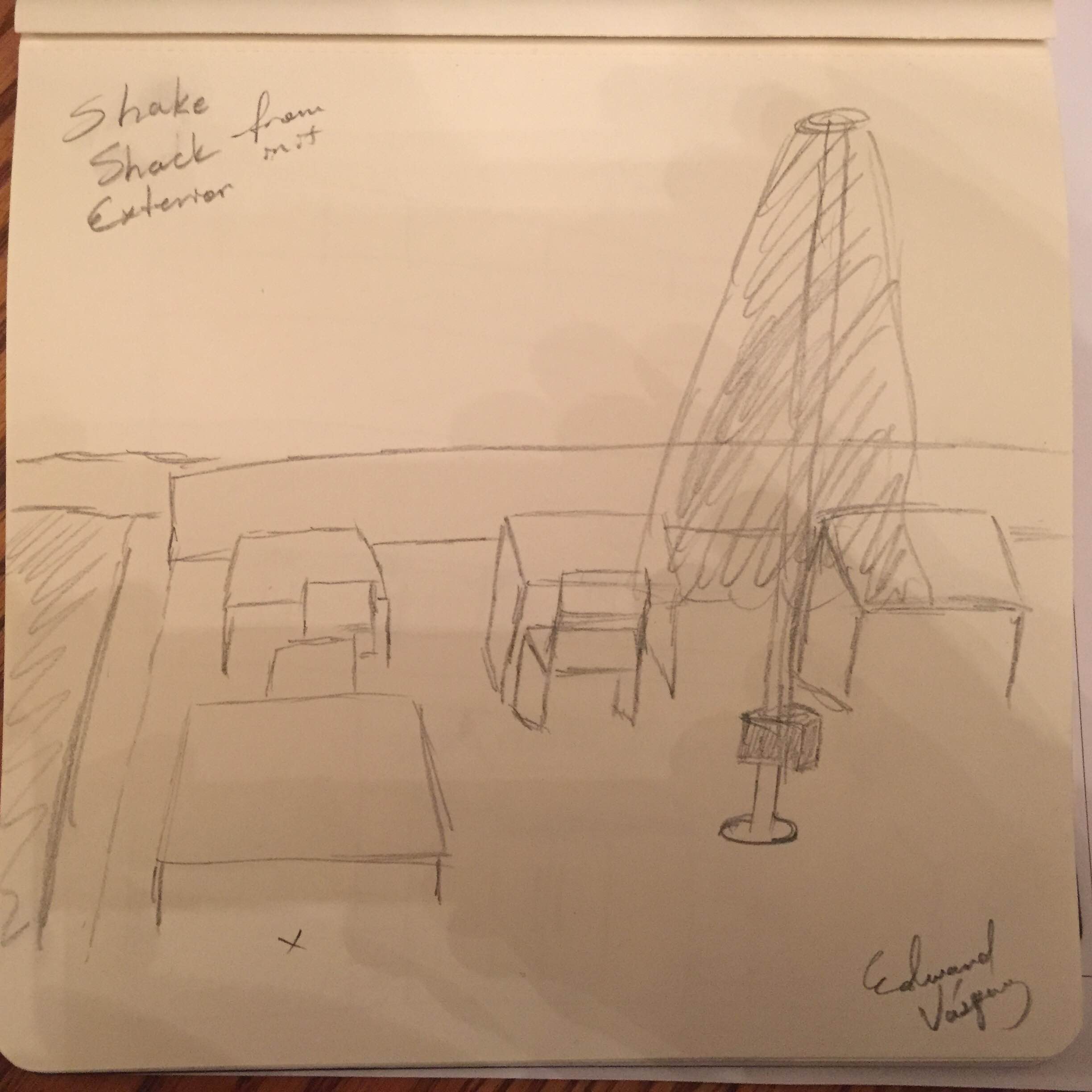
Though it could improve: there were few, if any, seats around. Plenty of street parking, but why not have more than just the Shake Shack with tables and chairs and umbrellas for customers on a hot day? What about all the schools and churches and non-commercial buildings around: how do they fit in? What implications do these have: is this supposed to be a node, say, a central thoroughfare? I’m not so sure about that.
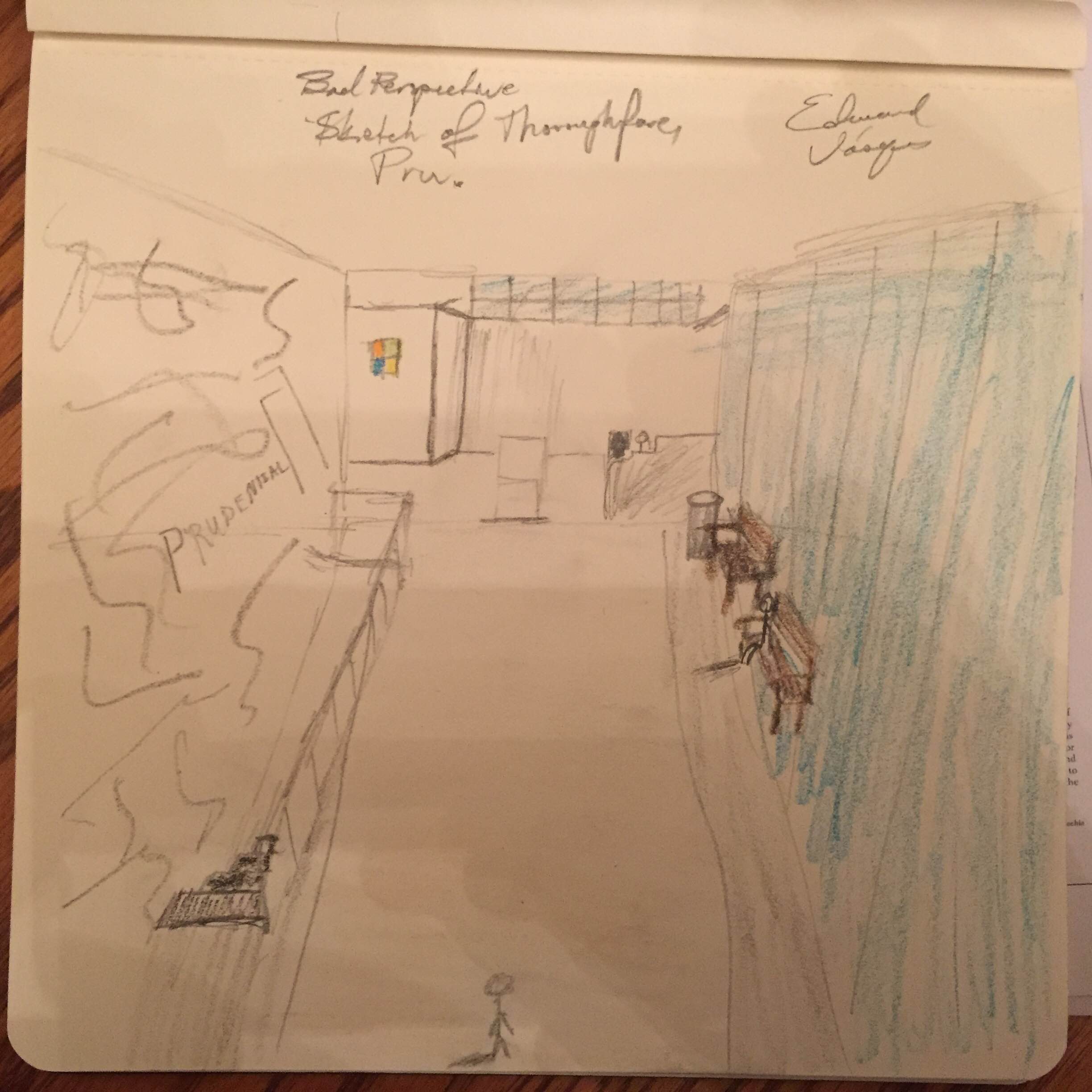
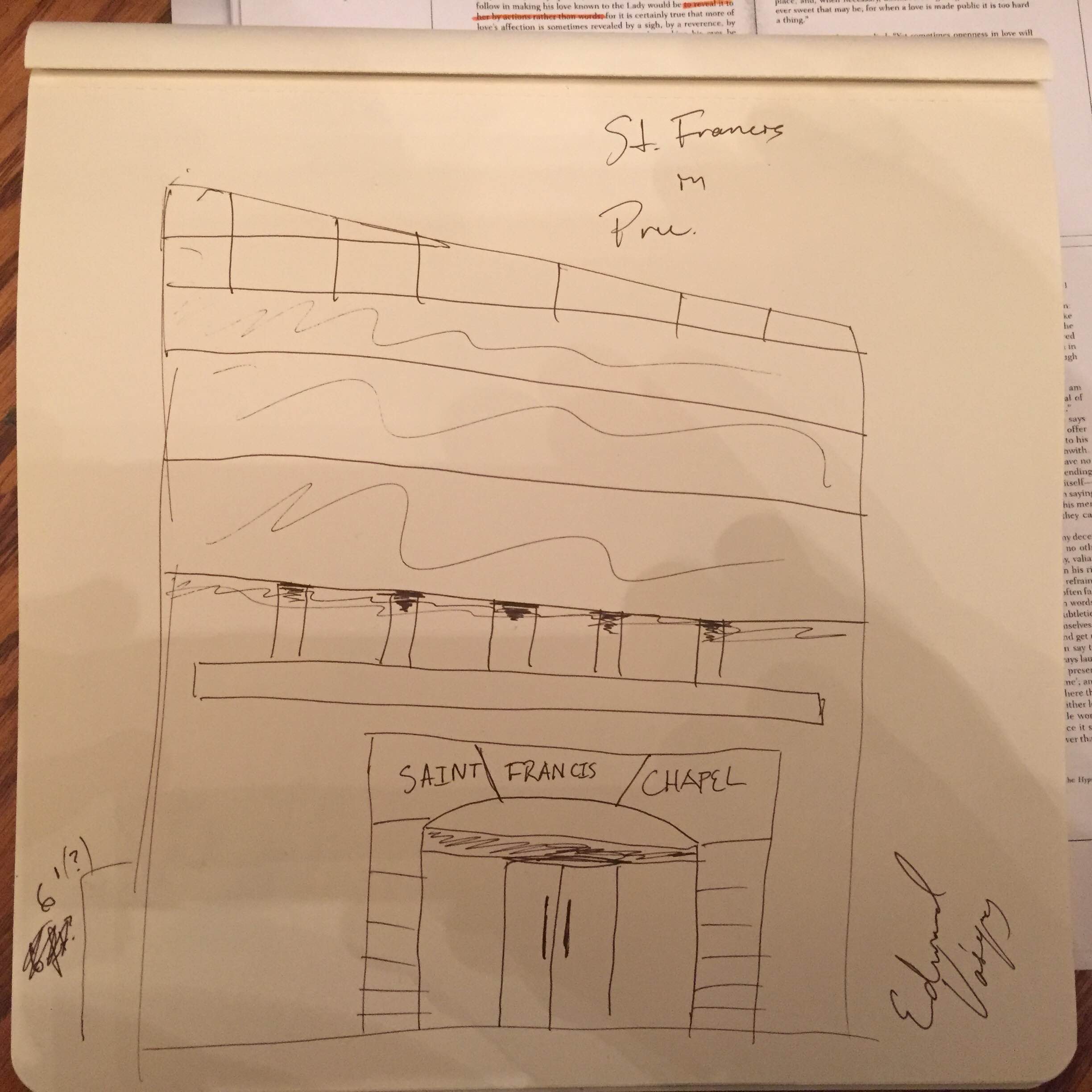
Regardless, Newbury St. feels like it fits with that section of Boston, which is more commercial in character. It feels like a piece of the puzzle. The Pru, conversely, feels like a micro- puzzle itself: I would almost say it is its own little town, encased in glass and steel and marble and stone. There are shops like a mall, sure; little kiosks and carts and tour stations and benches and even a park. But it has its own grocery store, as well: there’s a Shaw’s out near the Mariott; there’s also a chapel complete with masses, and businesses and a gym somewhere and a park at the center of the shopping area and the hotel itself.
The Pru is not an extension of the city environment but a microcosm, a miniature city within itself. And that idea is magnified to a grand scale, almost like a cathedral to the city with its giant roofs and long Roman-style hallways complete with gorgeous views of the Microsoft Store at one end and Dunkin’ on the other and grand staircases and escalators that raise you to the heights of the inside realm. But I am not sure what its purpose is, really. Is it a mall first? Then why businesses and a church? A church!1 Is it a new, much taller version of the company town, replete with everything a good employee would need? There where is the housing, or (more importantly) the parking? And why the luxury brands at every turn? This is what confuses me about the Pru area: how am I supposed to think of this place? How does it envision itself serving both the consumer and the Bostonian? Because it’s not an public space: it is a private tower, complete with security guards and no homeless people or vagrants. I am yet to understand how the Pru fits within its urban context.
Though it could improve: there were few, if any, seats around. Plenty of street parking, but why not have more than just the Shake Shack with tables and chairs and umbrellas for customers on a hot day? What about all the schools and churches and non-commercial buildings around: how do they fit in? What implications do these have: is this supposed to be a node, say, a central thoroughfare? I’m not so sure about that.
Regardless, Newbury St. feels like it fits with that section of Boston, which is more commercial in character. It feels like a piece of the puzzle. The Pru, conversely, feels like a micro- puzzle itself: I would almost say it is its own little town, encased in glass and steel and marble and stone. There are shops like a mall, sure; little kiosks and carts and tour stations and benches and even a park. But it has its own grocery store, as well: there’s a Shaw’s out near the Mariott; there’s also a chapel complete with masses, and businesses and a gym somewhere and a park at the center of the shopping area and the hotel itself.
The Pru is not an extension of the city environment but a microcosm, a miniature city within itself. And that idea is magnified to a grand scale, almost like a cathedral to the city with its giant roofs and long Roman-style hallways complete with gorgeous views of the Microsoft Store at one end and Dunkin’ on the other and grand staircases and escalators that raise you to the heights of the inside realm. But I am not sure what its purpose is, really. Is it a mall first? Then why businesses and a church? A church!1 Is it a new, much taller version of the company town, replete with everything a good employee would need? There where is the housing, or (more importantly) the parking? And why the luxury brands at every turn? This is what confuses me about the Pru area: how am I supposed to think of this place? How does it envision itself serving both the consumer and the Bostonian? Because it’s not an public space: it is a private tower, complete with security guards and no homeless people or vagrants. I am yet to understand how the Pru fits within its urban context.
Files
Collection
Citation
“Edward Vasquez,” US-WORLD 29, accessed October 19, 2026, https://usworld29.omeka.fas.harvard.edu/items/show/157.