Lauren Tracey
Title
Lauren Tracey
Description
While Newbury st and the Copley and prudential malls are very close geographically, they represent very different shopping experiences.
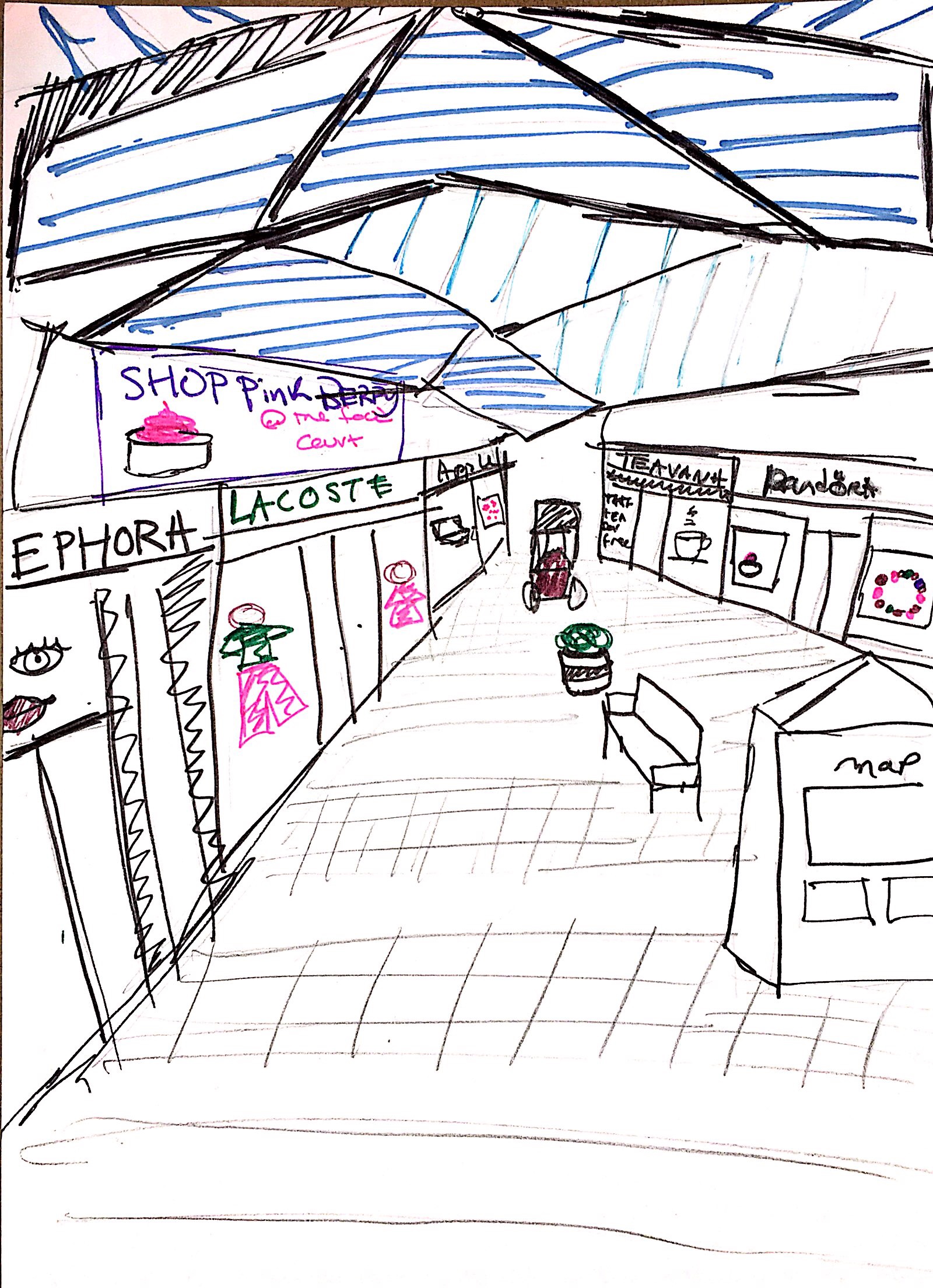
Copley malls and the prudential center represent a standard mall experience. The physical design involves lots of glass, in the storefronts and plethora of Windows and marbled and tiled floors. Unlike some typical shopping experiences however, these malls house upscale stores almost exclusively, all of which seemed relatively empty on a warm Saturday. All activities at the malls revolved around shopping, everyone there seemed to have a purpose, headed toward one-store or carrying bags towards the exit. This sense seemed to be elevated by the fact that there was no major food court, only sit down restaurants. There was a visible security presence at the malls, more so at the higher end stores, which had security at the door.
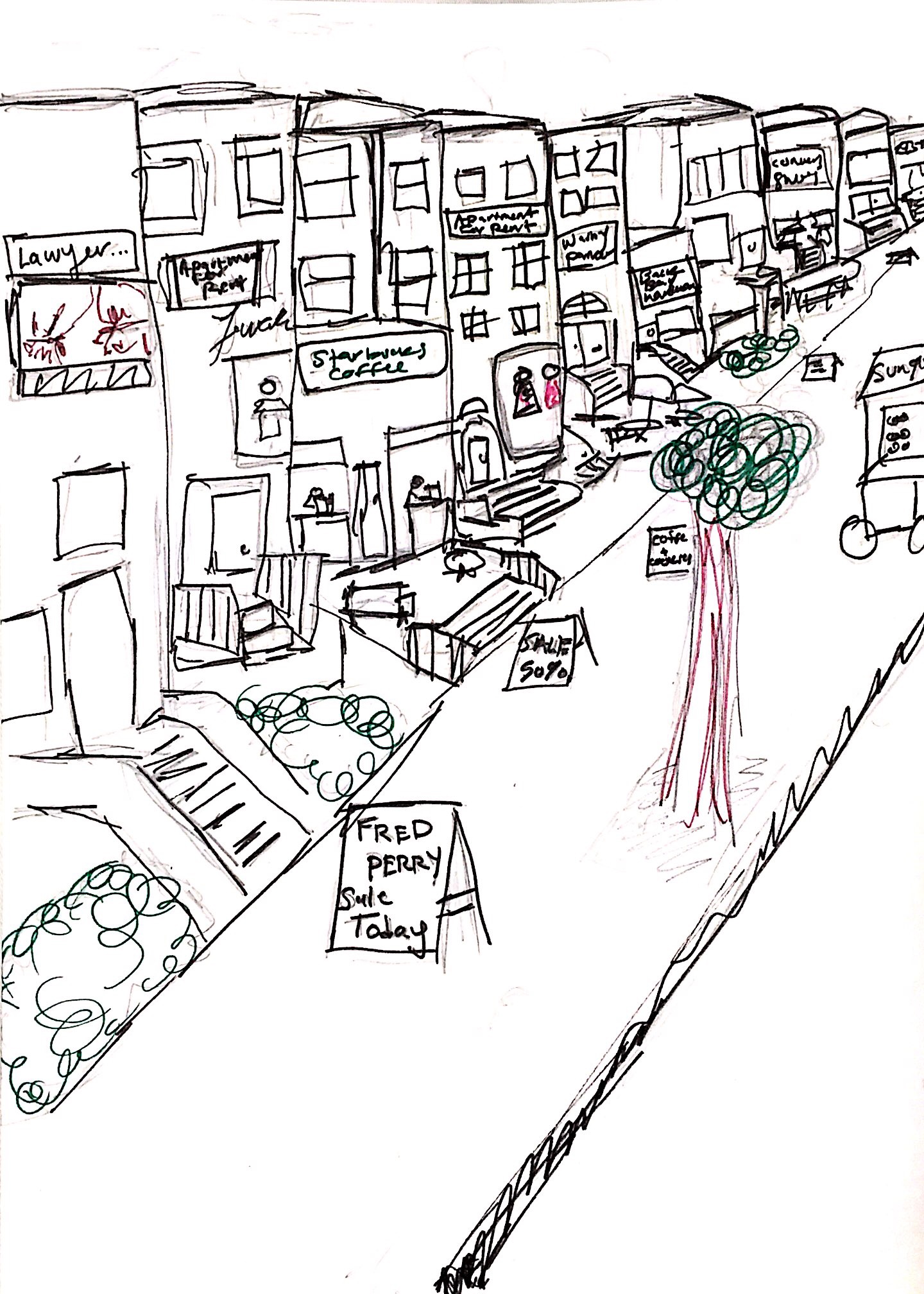
Newbury st on the other hand offered visitors a plethora of experiences. It's clear from the signage that the street has multiple uses; the sidewalk is covered in a frame signs and other larger advertisements showing off different stores on each block. There are hardware stores, salons, eateries, clothing stores, and many more just on the few blocks between Fairfield and Dartmouth. It's also obvious that there is a greater mix of people on Newbury st, people who have come to shop but also people who have simply come to enjoy being outdoors. There are more children and pets here as well. There are also homeless people on the street, asking for spare change, which was obviously not a feature in the mall, but their presence is minimal here compared to other parts of Boston. Retail shop owners use so age and window displays to entice customers, and to replicate a mall experience. But Newbury st will never truly be like a mall, it will always be more like an open marketplace for more then just shopping.
Copley malls and the prudential center represent a standard mall experience. The physical design involves lots of glass, in the storefronts and plethora of Windows and marbled and tiled floors. Unlike some typical shopping experiences however, these malls house upscale stores almost exclusively, all of which seemed relatively empty on a warm Saturday. All activities at the malls revolved around shopping, everyone there seemed to have a purpose, headed toward one-store or carrying bags towards the exit. This sense seemed to be elevated by the fact that there was no major food court, only sit down restaurants. There was a visible security presence at the malls, more so at the higher end stores, which had security at the door.
Newbury st on the other hand offered visitors a plethora of experiences. It's clear from the signage that the street has multiple uses; the sidewalk is covered in a frame signs and other larger advertisements showing off different stores on each block. There are hardware stores, salons, eateries, clothing stores, and many more just on the few blocks between Fairfield and Dartmouth. It's also obvious that there is a greater mix of people on Newbury st, people who have come to shop but also people who have simply come to enjoy being outdoors. There are more children and pets here as well. There are also homeless people on the street, asking for spare change, which was obviously not a feature in the mall, but their presence is minimal here compared to other parts of Boston. Retail shop owners use so age and window displays to entice customers, and to replicate a mall experience. But Newbury st will never truly be like a mall, it will always be more like an open marketplace for more then just shopping.
Files
Collection
Citation
“Lauren Tracey,” US-WORLD 29, accessed October 20, 2026, https://usworld29.omeka.fas.harvard.edu/items/show/156.