Rachel Tandias
Title
Rachel Tandias
Description
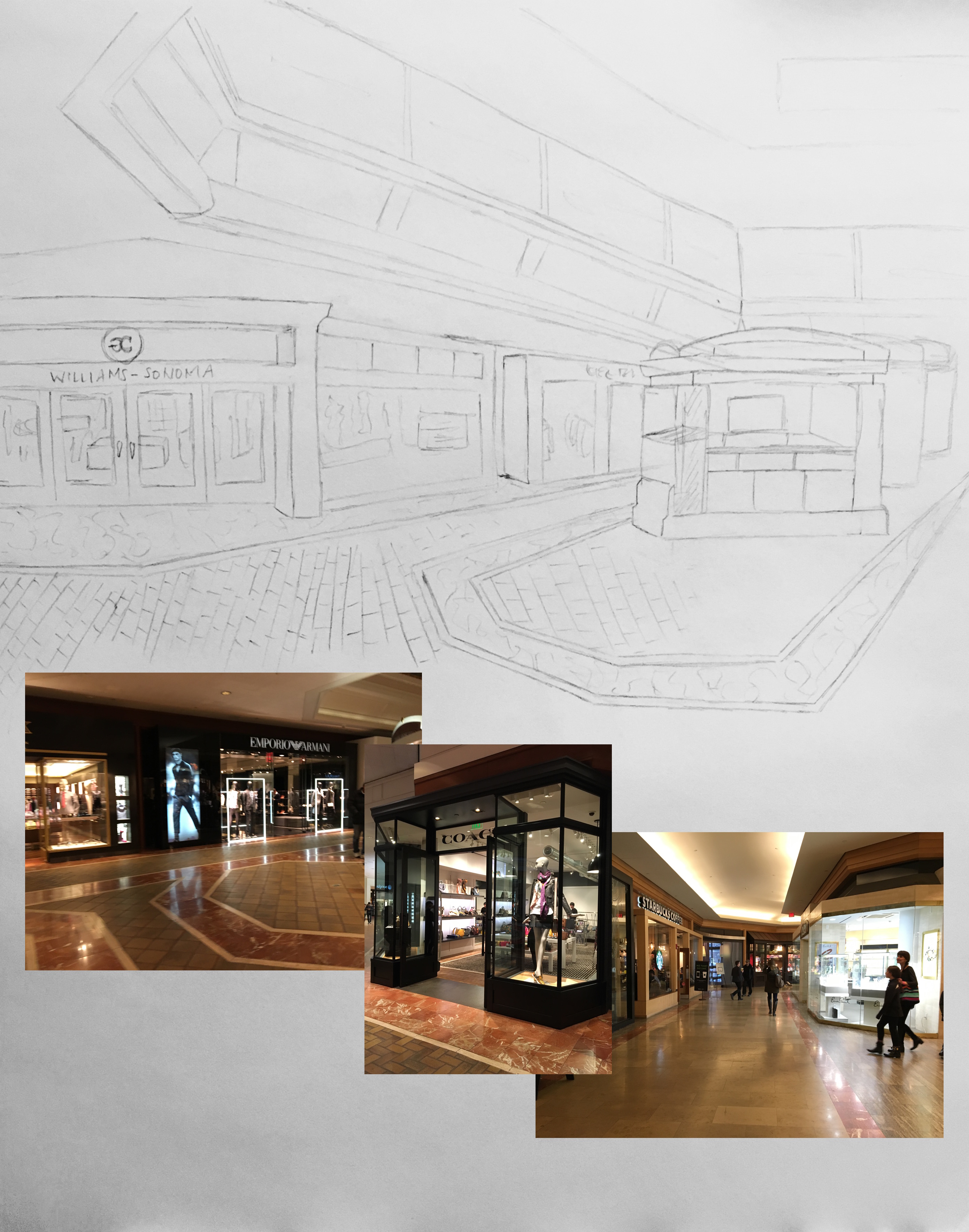
While visiting the Copley Place shopping mall, what initially struck me was the ways in which the physical design of the mall affected my experience of the space. Several aspects of the materials and design of the storefronts make the interior of the mall seem like an outdoor space, much like a commercial street. The floors of Copley Place are composed of several different types of marble tiles and bricks laid out in irregular patterns that frame the winding hallways of the mall, giving the illusion of a street system outlined by sidewalks. The shops have unique storefronts composed of vastly different materials and articulating with the walls of the mall at different heights and angles. This gives the effect of many separate buildings, rather than a unified shopping center. The large windows in the ceilings and at each of the entrances flood the space with natural light, and the large fountain with surrounding greenery at the center of the mall further emphasize the outdoor, nature-like component of the space.
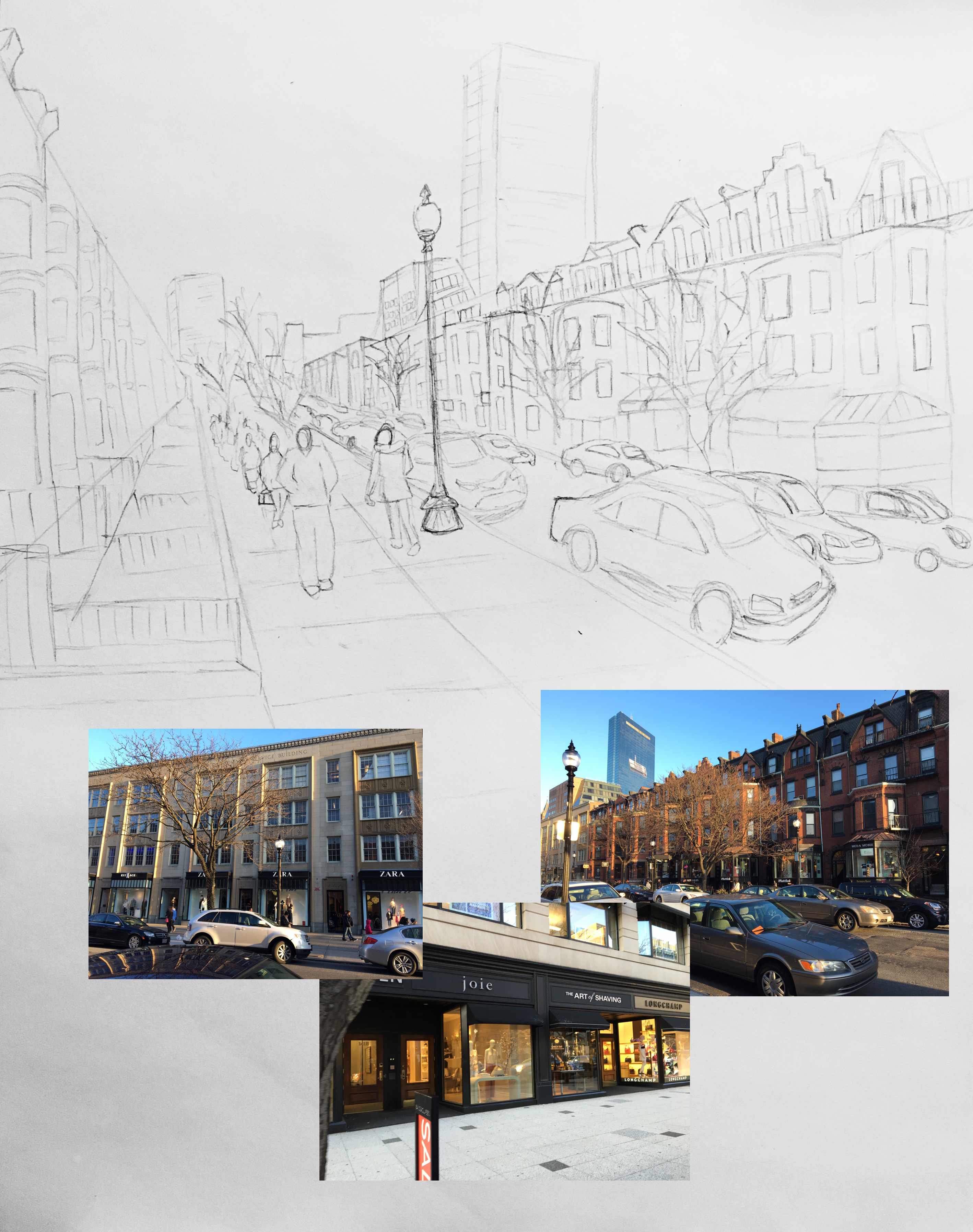
In contrast to the inhomogeneous shops within Copley Place, the commercial area of Newbury Street is visually and spatially unified in many aspects. The red brick buildings lining nearly the entirety of the street are similar in coloring and style, and rows of regularly spaced trees and street lamps make the street seem insulated from the surrounding urban grid. Newbury Street is situated between a residential district and a metropolitan business area, and the tops of the skyscrapers nearby are visible from street level. The street is bounded on one end by parking lots and public transit stops, which also contribute to the isolated nature of this commercialized outdoor space. While the buildings lining the street appear to be superficially homogenous and unified, the oversized windows and protruding store fronts, as well as the exterior signs and split- level entrances, clearly distinguish the commercial areas from the residential and noncommercial areas. These rare noncommercial areas are largely defined by gates, withdrawn entrances, and small gardens.
In contrast to the inhomogeneous shops within Copley Place, the commercial area of Newbury Street is visually and spatially unified in many aspects. The red brick buildings lining nearly the entirety of the street are similar in coloring and style, and rows of regularly spaced trees and street lamps make the street seem insulated from the surrounding urban grid. Newbury Street is situated between a residential district and a metropolitan business area, and the tops of the skyscrapers nearby are visible from street level. The street is bounded on one end by parking lots and public transit stops, which also contribute to the isolated nature of this commercialized outdoor space. While the buildings lining the street appear to be superficially homogenous and unified, the oversized windows and protruding store fronts, as well as the exterior signs and split- level entrances, clearly distinguish the commercial areas from the residential and noncommercial areas. These rare noncommercial areas are largely defined by gates, withdrawn entrances, and small gardens.
Files
Collection
Citation
“Rachel Tandias,” US-WORLD 29, accessed October 19, 2026, https://usworld29.omeka.fas.harvard.edu/items/show/152.